
Fuel System Health: What to Inspect, Test and Maintain
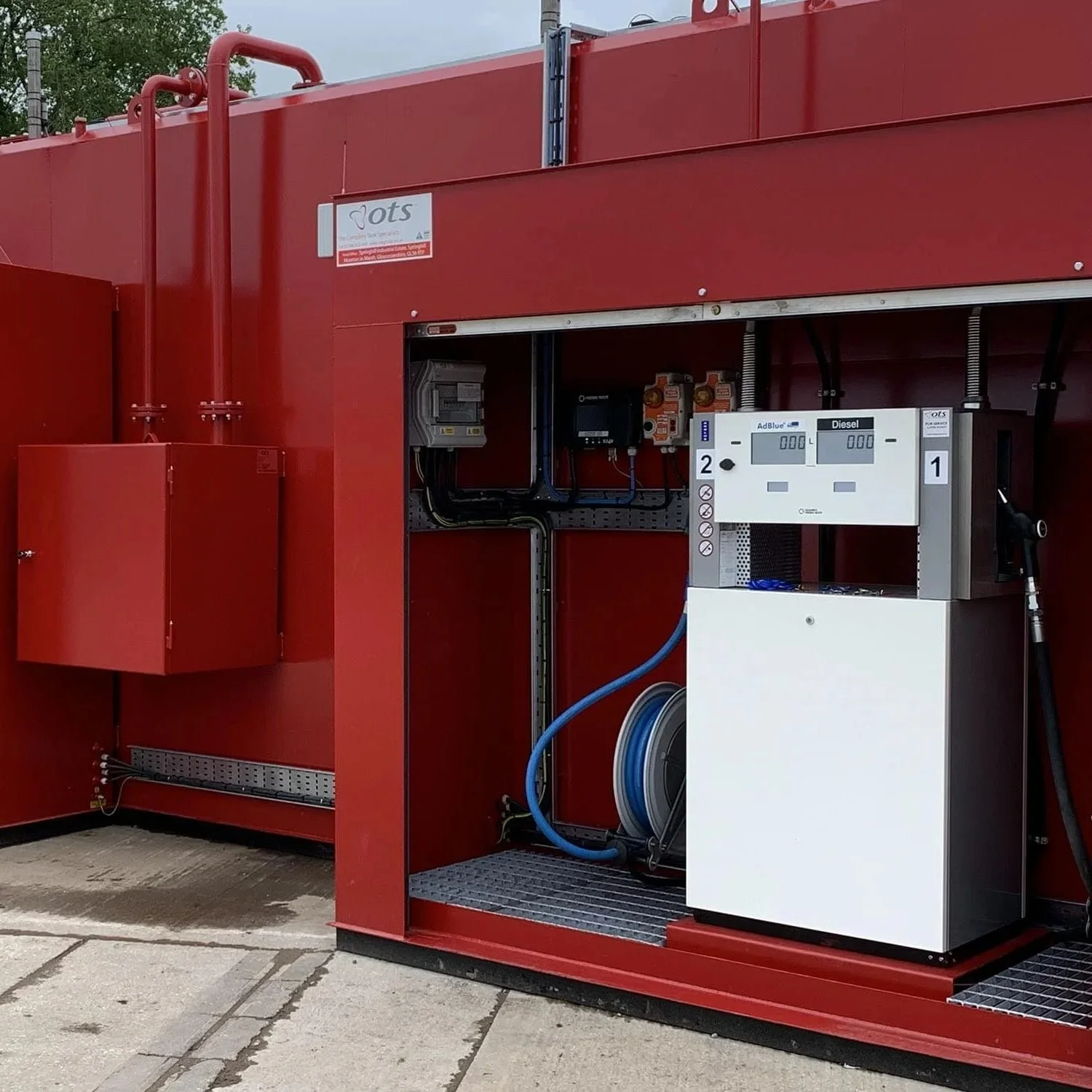
Having enough fuel on site isn’t the same as having a fuel system that works. Fuel infrastructure supports vehicle refuelling, standby generation, heating systems, industrial plant, site equipment or emergency power, but if it isn’t maintained, it can fail at exactly the point it’s needed most.
For many operators, that risk is easy to miss. A system can appear operational while water accumulates, fuel degrades, sediment builds and corrosion spreads. Most of this isn’t visible from the outside. By the time the system is placed under pressure, the issue is no longer a maintenance task, it’s an operational risk.
That is why stored fuel needs to be clean. Tanks need to be structurally sound. Pumps, gauges, alarms and pipework need to work properly. Records need to be current. Maintenance needs to be planned before a problem becomes urgent.
This guide explains what good fuel system maintenance looks like, covering planned preventative maintenance, regular inspection, fuel sampling, tank cleaning, fuel polishing, equipment checks and clear documentation. It’s written for any organisation that stores fuel on site, from fleet operators and industrial sites to healthcare estates, data centres, utilities, public sector bodies, construction sites and commercial facilities.
Contents
1. What a healthy fuel system looks like
2. The hidden risks in stored fuel systems
3. Why planned preventative maintenance matters
4. What a good fuel system inspection should cover
6. Tank cleaning and fuel polishing
7. Pump, dispenser, gauge and alarm checks
8. Critical infrastructure and standby systems
9. Project example: fuel system maintenance for hospital generator infrastructure
10. Records, compliance and audit readiness
What a healthy fuel system looks like
A healthy fuel system is one that’s fully functional and ready to perform when needed.
A well-maintained fuel system should have:
Fuel that remains clean and usable
Tanks that are structurally sound
Effective bunding and secondary containment
Working pumps, dispensers, hoses and nozzles
Accurate gauges and alarms
Safe pipework, valves and fittings
Clear access for inspection and maintenance
Up-to-date inspection and service records
A defined plan for contamination, leakage or equipment failure
No two sites are the same, so maintenance shouldn’t be either. At OTS Group, we assess your tanks and equipment to deliver tailored maintenance strategies that match your operational needs.
The hidden risks in stored fuel systems
Most fuel system issues begin before they become visible. A tank can look acceptable from the outside while contamination is developing inside. A pump can continue operating while its components are wearing. A bund can appear intact while cracks or drainage problems are increasing environmental risk.
The most common risks include water ingress, microbial contamination, sediment and sludge build-up, corrosion, poor fuel turnover, inaccurate monitoring, and failure of ancillary equipment.
Water ingress
Water is one of the most common causes of fuel system problems. It can enter a tank through damaged seals, access points, vents, breathers, poor fill procedures or condensation. Temperature changes can also create moisture inside storage tanks.
Once water is present, it typically settles at the bottom of the tank, where it can cause corrosion, support microbial growth and disturb accumulated sediment. It's often found through sampling, inspection or filter problems.
Microbial contamination
Microbial contamination is often referred to as diesel bug. It develops where water and fuel meet, with bacteria, fungi and yeast growing at this interface.
Over time, they create sludge and acidic by-products. These can lead to blocked filters, poor combustion, tank corrosion and injector issues.
Microbial contamination is a particular risk where fuel remains static for long periods. Backup generator systems, low-turnover tanks and seasonal fuel storage are all vulnerable.
Sediment and sludge
Sediment can develop through fuel degradation, tank corrosion, oxidation by-products and contamination introduced during deliveries.
This material often collects at the bottom of the tank, where it may remain undisturbed until fuel movement, delivery turbulence or low tank levels pull it into the system. Once sediment reaches downstream equipment, it can block filters and affect engine performance.
Internal corrosion
Internal corrosion often develops where water sits against steel surfaces. It can be difficult to identify from outside the tank.
Left unmanaged, it can weaken the tank structure, compromise integrity and increase the risk of leakage. Tanks over 20 years old, or those with unknown service history, should be prioritised for Non-Destructive Testing (NDT) or ultrasonic testing as part of a structured inspection programme.
Poor fuel turnover
Fuel that remains stored for long periods can degrade. This is particularly common in standby systems.
Stored fuel needs to be monitored and tested, rather than assumed to be usable because the tank is full.
Inaccurate gauges and alarms
A fuel system is only as reliable as the information it provides. Faulty gauges, alarms and monitoring equipment can all lead to overfill incidents, undetected stock losses, spill risk and regulatory exposure.
Manual dipping and gauge cross-checking should form part of regular inspection.
Failing pumps and dispensers
Pumps, hoses, nozzles, seals and meters all need planned maintenance. Failures here can affect safety, stock accuracy, refuelling performance and environmental compliance, often before the fault is visible.
Why planned preventative maintenance matters
Planned preventative maintenance replaces reactive response with a structured programme. It helps identify early signs of deterioration before they affect operations, compliance or safety.
A good PPM programme should be based on risk, and risk isn’t equal across sites. Frequency may be annual, bi-annual, quarterly or bi-monthly, depending on the site, tank age, stored product, usage pattern and operational importance. The decision about which frequency is right requires honest assessment of several factors. Sites that warrant more frequent PPM typically share some or all of these characteristics: older tanks; fuel stored for long periods without regular turnover; backup or standby systems that may sit unused for months; sites with a known contamination or water ingress history; operations where the consequences of fuel system failure are immediate and serious, such as hospitals, data centres and emergency services. For these sites, annual PPM is often insufficient. Bi-annual or quarterly programmes give operators the visibility needed to catch deterioration before it reaches operational thresholds. Sites with lower risk profiles, typically fleet depots with consistent fuel turnover, newer tanks and regular usage, may manage effectively on annual visits. But even here, the programme should be reviewed if tank age increases, site conditions change, or sampling results show signs of deterioration.
The value of PPM isn’t only in the individual inspection. Repeated reports show how a system is changing over time, whether corrosion is progressing, whether contamination is recurring, whether fuel quality is stable. A single visit tells you the condition today. A programme tells you whether the system is getting better or worse. That distinction matters when making decisions about cleaning, lining, tank replacement or capital planning.
A planned approach also helps maintenance happen around site operations, reducing the risk of emergency callouts, downtime and rushed decision-making. It also supports contract and insurance requirements: increasingly, operators in regulated sectors are expected to demonstrate that fuel infrastructure is maintained to a documented standard, not just inspected when something goes wrong. OTS PPM visits cover tank condition, bund integrity, fuel sampling, pump and dispenser checks, gauge and alarm testing, and documentation of findings with remedial recommendations, giving operators a clear record of system status and any actions required.
What a good fuel system inspection should cover
A fuel system inspection should look beyond the tank shell. It should assess the full storage and dispensing system, and the site conditions around it.
Tank shell and structure
The inspection should look for signs of corrosion, damage, deformation, leakage, staining or coating breakdown. External surfaces can reveal early warning signs. Internal condition may need further assessment where tank age, history or contamination raises concern.
Bund and secondary containment
The bund is the second line of defence. It should be clean, intact and able to contain a spill.
Inspectors should check for cracks, standing liquid, blocked drains, vegetation, debris and signs of previous leakage. A tank can be in reasonable condition while the bund creates the greater compliance risk.
Pipework, valves and fittings
Pipework should be checked for corrosion, leaks, poor support, impact damage and insecure connections. Valves, vents and fittings should be accessible and in working condition.
Labelling should be clear, fill points protected and delivery areas safe and controlled.
Access and safety
Engineers need clear routes to inspect, maintain and repair the system. Ladders, walkways, hatches, manways and working areas should all be assessed.
Poor access delays maintenance and increases safety risk.
Environmental surroundings
The area around the tank should be checked for blocked drainage, staining, damaged hardstanding, spill risks, poor housekeeping and nearby watercourses.
Fuel sampling and testing
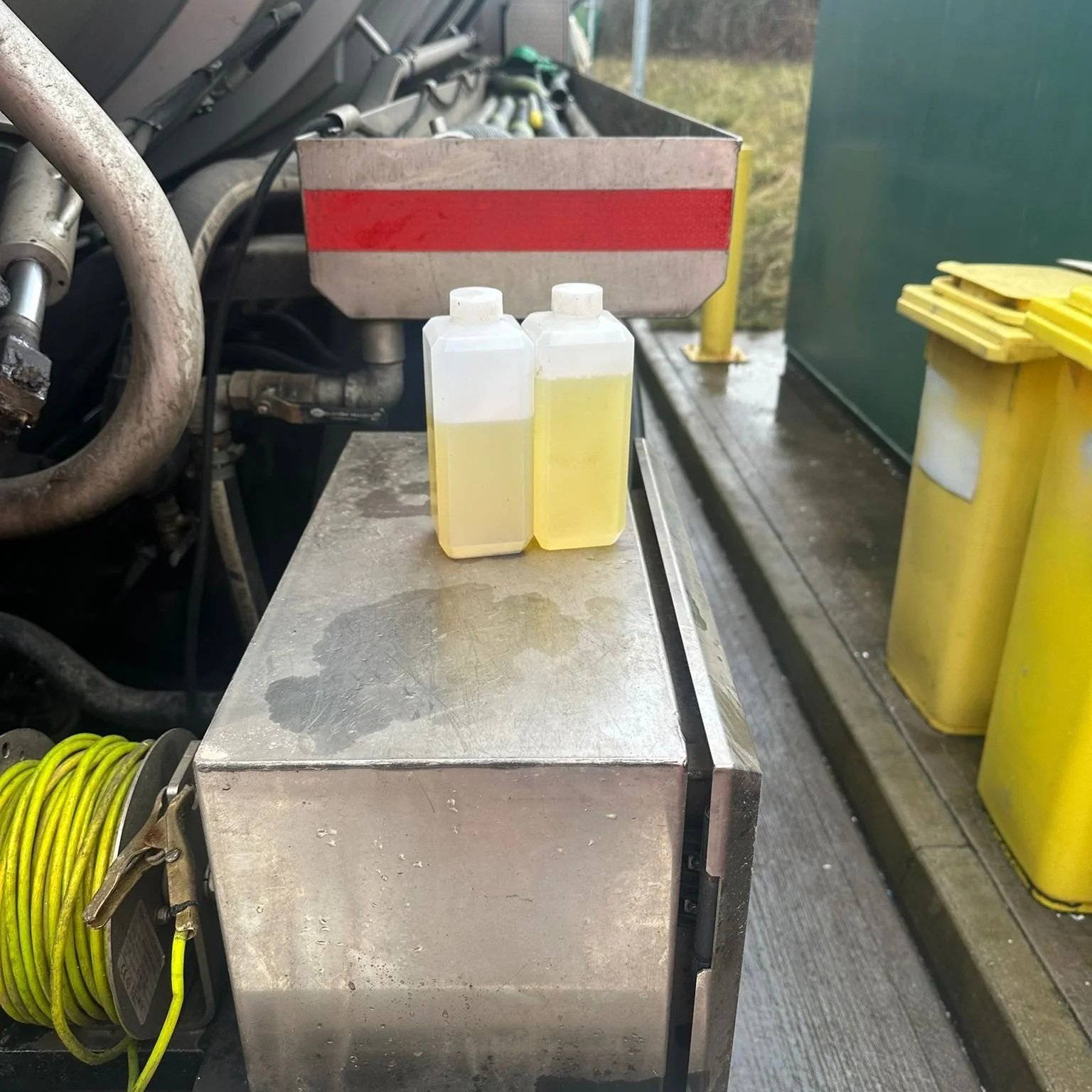
Fuel sampling is one of the most useful checks an operator can carry out. Visual inspection alone isn’t enough: fuel can appear clear while still containing microscopic contamination, and microbial activity can begin before any operational symptoms appear.
A structured fuel sampling programme should test for:
Water contamination
Particulate contamination
Microbial contamination
Sulphur content
FAME levels in biodiesel blends
General fuel condition and stability
Samples should be taken from the right points. Bottom samples are important because water, sludge and sediment tend to collect at the base of the tank. Middle samples help show the condition of fuel being drawn into the system. Top samples may also be useful in some cases.
Testing helps identify the correct next step, and this is where many operators underestimate sampling’s value. Sampling is a decision tool. If fuel is lightly contaminated, polishing is likely sufficient to restore it to an acceptable condition. If the tank contains significant sludge or water, cleaning should come before polishing: polishing contaminated fuel through a dirty tank reintroduces the problem. If the fuel is badly degraded or non-recoverable, uplift and safe disposal is the only responsible route. Getting this sequence right saves both time and cost. Getting it wrong, by polishing when cleaning was needed, or disposing of fuel that could have been recovered, means unnecessary expense and repeat interventions.
Sampling also gives operators a baseline, allowing future results to be compared. It shows whether fuel condition is improving, stable or deteriorating over time. This is particularly important for standby and backup systems, where fuel may sit undisturbed for months between generator tests. A generator test confirms the engine starts. It doesn’t confirm the fuel is fit for an extended run under load. Sampling does.
Tank cleaning and fuel polishing
Fuel sampling often leads to one of two interventions: fuel polishing or tank cleaning. They're connected, but they're not the same.
Fuel polishing
Fuel polishing is the process of circulating stored fuel through filtration equipment to remove water, particulate matter, microbial contamination and sludge. It's normally carried out on site using mobile filtration equipment.
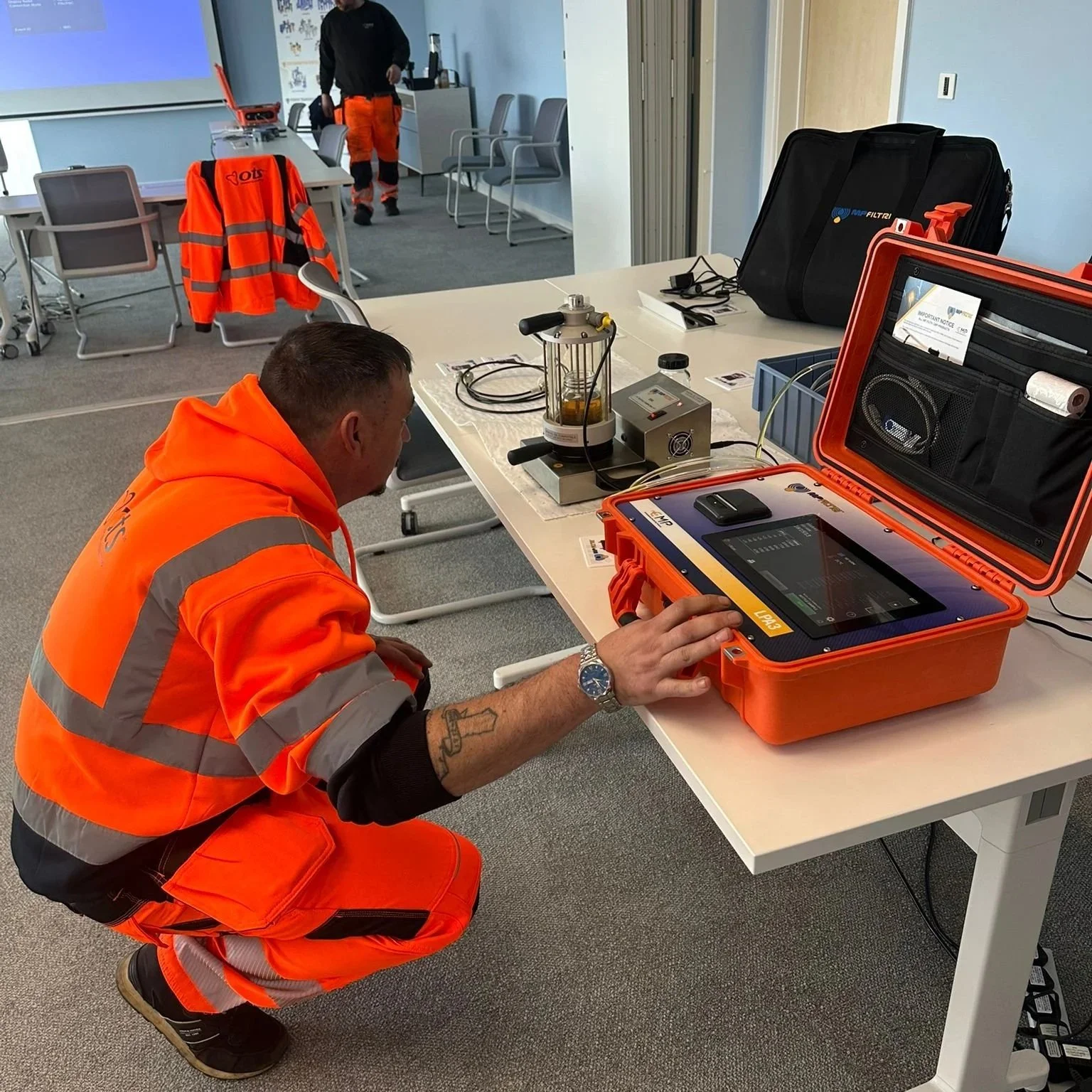
The process should begin with testing. Engineers need to understand the starting condition of the fuel before deciding on the filtration approach.
A staged filtration process is usually best. It allows contamination to be removed progressively rather than forcing heavily contaminated fuel through fine filtration too early. OTS engineers carry out fuel polishing on site using specialist mobile filtration equipment, working through staged passes until samples confirm the fuel has returned to an acceptable condition.
Fuel polishing is particularly useful where contamination is present but the fuel can still be recovered. It can reduce waste, protect equipment and avoid unnecessary fuel disposal.
Tank cleaning
Tank cleaning deals with the source of contamination. If sludge, water and sediment remain inside the tank, clean fuel may become contaminated again.
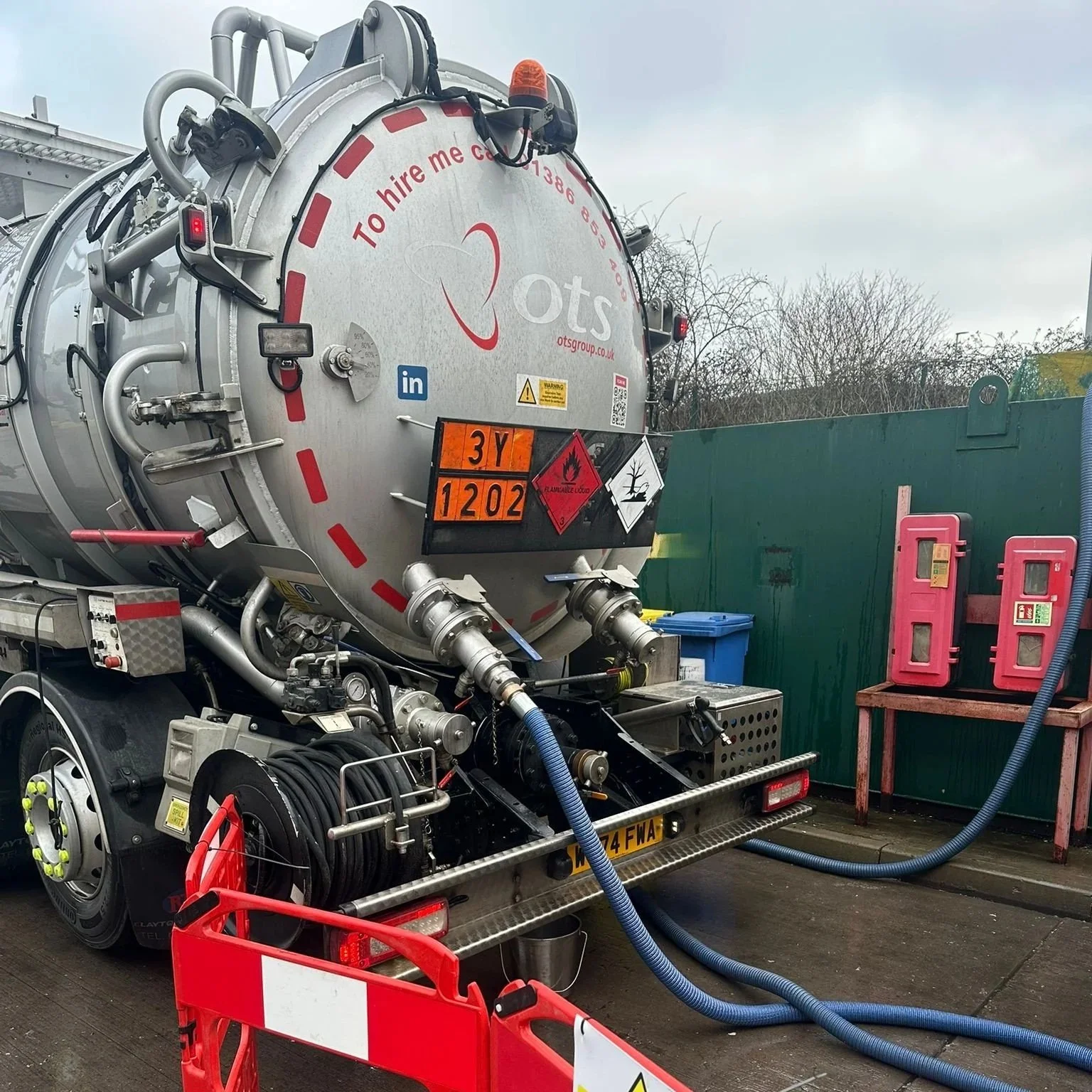
Tank cleaning removes accumulated deposits from the tank interior. Where the tank has accessible ports, contamination can often be removed without manned entry, using pumping, jetting and vacuum extraction equipment. This reduces both disruption and confined space risk.
Where internal inspection or heavier cleaning is needed, manned entry may be required. Manned tank entry is a confined space activity. Engineers must plan it properly before work begins.
The tank must be isolated, tested, ventilated and certified safe before entry. A confined space team will normally include an entrant, an attendant and a supervisor. Each role is essential.
Tank cleaning is typically recommended where there is visible sludge, repeated filter blockage, water contamination, microbial activity or evidence that fuel polishing alone won't address the root cause.
Cleaning frequency
There’s no single cleaning frequency that suits every system, but some clear indicators help. In OTS’s experience, cleaning every 12 to 24 months is a reasonable starting point for most in-service tanks. Sites at the more frequent end of that range are those with older tanks, static or low-turnover fuel, a history of microbial contamination or water ingress, or systems where cleaning has been deferred and the evidence is starting to show. Sites with newer tanks, consistent fuel turnover and clean sampling results may extend comfortably to 24 months. What matters is that the frequency is based on evidence, not assumption.
Cleaning should also be considered as a precondition before tank lining, manned internal inspection, decommissioning or major system upgrades. Attempting these activities without cleaning first compromises both the quality of the work and the safety of personnel on site.
Pump, dispenser, gauge and alarm checks
Tanks often receive most of the attention, but a fuel system in good condition also depends on the equipment connected to the tank.
Pumps and dispensers
Pump maintenance should check for leaks, wear, flow issues, meter accuracy and safe electrical operation. A pump may still dispense fuel while its performance is declining.
Reduced flow rate, noise, vibration, repeated tripping or visible leakage should all be investigated. Hoses and nozzles should also be inspected for cracks, stiffness, damaged seals, worn fittings and poor shut-off performance.
Emergency stops
Emergency stop systems must work. They should be tested as part of planned maintenance and any fault should be treated seriously.
A failed emergency stop is a major defect.
Gauges and stock readings
Gauge accuracy affects both operations and compliance. If gauge readings are wrong, operators may miss stock losses, overfill risks or unexpected consumption.
Manual checks can help verify gauge performance. Automatic Tank Gauge (ATG) systems can also provide more detailed monitoring, alarms and reporting.
Overfill prevention
Overfill prevention devices should be checked regularly. A delivery incident can create immediate environmental risk.
Fill points, vents, alarms and containment should all support safe delivery.
Fuel management systems
Fuel management systems (FMS) can improve visibility by helping operators understand stock levels, dispensing events, consumption trends and anomalies.
This technology needs maintenance. Sensors, probes, software, connections and alerts should all be checked. An FMS that isn’t maintained can report inaccurate stock levels, miss dispensing anomalies, or fail to trigger alarms, creating the same operational exposure as having no monitoring at all.
Critical infrastructure and standby systems
Every fuel system needs maintenance, but some carry higher consequences. Hospitals, data centres, utilities, public sector estates and emergency service sites often rely on stored fuel for standby power, heating or continuity operations.
These systems present a specific maintenance challenge as fuel may remain static for long periods. The site may not use the system every day, but when it's needed, it must work immediately.
For critical systems, operators should pay close attention to:
Fuel age and turnover
Sampling frequency
Water and microbial contamination
Filter condition
Generator test results
Tank integrity
Alarm performance
Fuel transfer systems
Records and audit trails
Emergency uplift or support plans
Generator testing confirms part of the picture. It doesn't automatically confirm long-term fuel quality across the tank.
In critical environments, fuel system maintenance should be proactive, documented and reviewed regularly. When the system is called upon, fuel condition shouldn’t be the thing that lets it down.
Project example: fuel system maintenance for hospital generator infrastructure
Woodlands Power NHS project
OTS Group was engaged to deliver an advanced fuel storage and polishing solution to support the hospital generator infrastructure at the Woodlands Power NHS project.
The project involved two existing 80,000-litre bulk diesel tanks already used to store backup fuel for the gas boilers. Given the space constraints on site, the preferred approach was to use the same bulk storage for the new generator fuel system.
The first step was to confirm whether the existing fuel and storage facilities were suitable for continued use. OTS carried out fuel sampling and found the fuel needed polishing before it could be used with confidence.
The fuel was then removed from the tanks in stages to maintain boiler backup resilience throughout the works. The tanks were fully inspected and tested before the polished fuel was returned to storage.
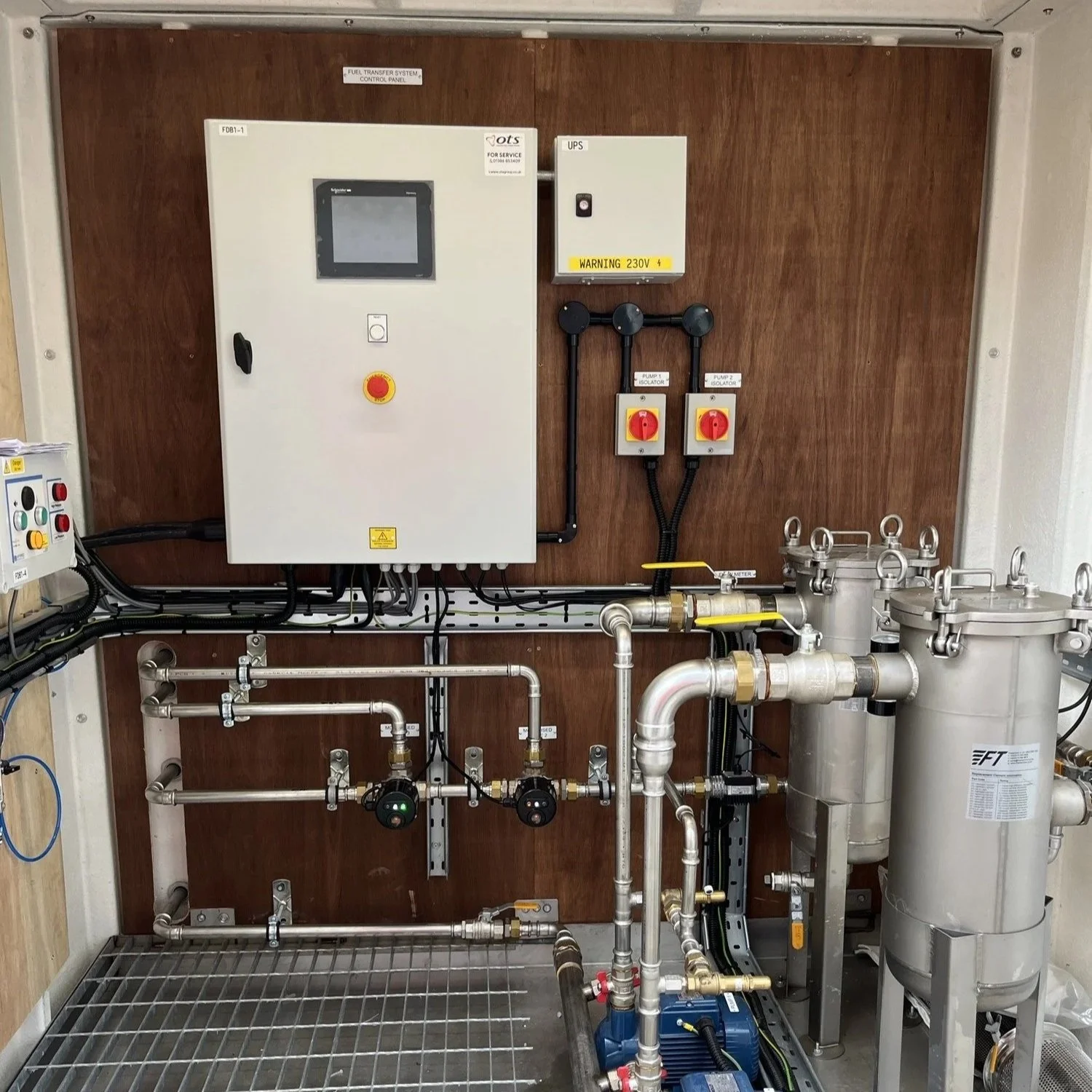
OTS then installed a continuous fuel polishing system to maintain fuel quality in the bulk tanks. A remote day tank was also installed, with its own smaller polishing system. Fuel from the bulk tanks is transferred to the day tank and polished as part of the transfer process.
A PLC-controlled central control panel was introduced to manage the wider fuel system. This monitors and controls fuel levels, valve operation, filtration, polishing cycles and fuel transfer from the bulk tanks to the day tank.
The project illustrates that keeping a fuel system in good condition requires more than storage capacity. Fuel quality, transfer control, monitoring, filtration and planned maintenance all need to work together, particularly in environments where failure isn't an option.
Records, compliance and audit readiness
Good fuel system management depends on evidence. Operators need records that show what was checked, what was found and what action was recommended.
Good documentation should include:
Inspection reports
Fuel sampling results
Fuel polishing records
Tank cleaning reports
Photographic evidence
Pump service logs
Gauge and alarm test records
NDT reports where applicable
Waste transfer documentation
Remedial recommendations
Dates of completed and planned work
A single inspection report shows the condition of the system at one point in time. A sequence of reports shows how the system is changing.
Clear records support budget planning, audit readiness, insurance reviews, environmental checks and internal governance. Without them, even a well-maintained system is difficult to evidence. That creates real exposure. Insurers may query liability following a spill or leak if there’s no documented inspection record. Regulators including the Environment Agency expect evidence of compliance management, not just the assertion of it. In regulated sectors such as healthcare and utilities, governance frameworks increasingly expect fuel systems to be maintained to a documented standard with audit trails that can be examined on request. Records don’t create compliance; they prove it.
Why fuel system maintenance can’t be left to chance
A fuel system that works under pressure is one that’s been maintained before the pressure arrives. That means regular inspection, clean fuel, sound tanks, maintained equipment, working alarms, accurate records and clear accountability.
The pattern that runs through this guide is the same in every case: problems develop before they become visible. Water collects before filters block. Fuel degrades before engines suffer. Corrosion spreads before integrity is compromised. The systems that fail tend to be the ones where that progression was allowed to continue unchecked, because no one was looking.
Planned maintenance is what interrupts that progression. It creates the visibility to find problems while they're still manageable, rather than when the cost or consequence has grown. For operators in safety-critical environments, that isn't optional: it's the basic standard of responsible management.
Fuel systems that sit in the background without regular attention aren't low maintenance. They're unmanaged risk. The organisations that understand this manage their fuel infrastructure the same way they manage any other safety-critical asset: proactively, consistently, and with records to show for it.