
Fuel Tank Hire Installation in Practice
Temporary fuel storage is often treated as a quick fix. A site needs extra capacity, a project needs fuel available quickly, or permanent infrastructure is being planned and the operation can’t wait for a new tank to be manufactured.
But a hire tank still becomes part of a working fuel system. It needs to be planned around site access, safe use, containment, inspection and the infrastructure around it.
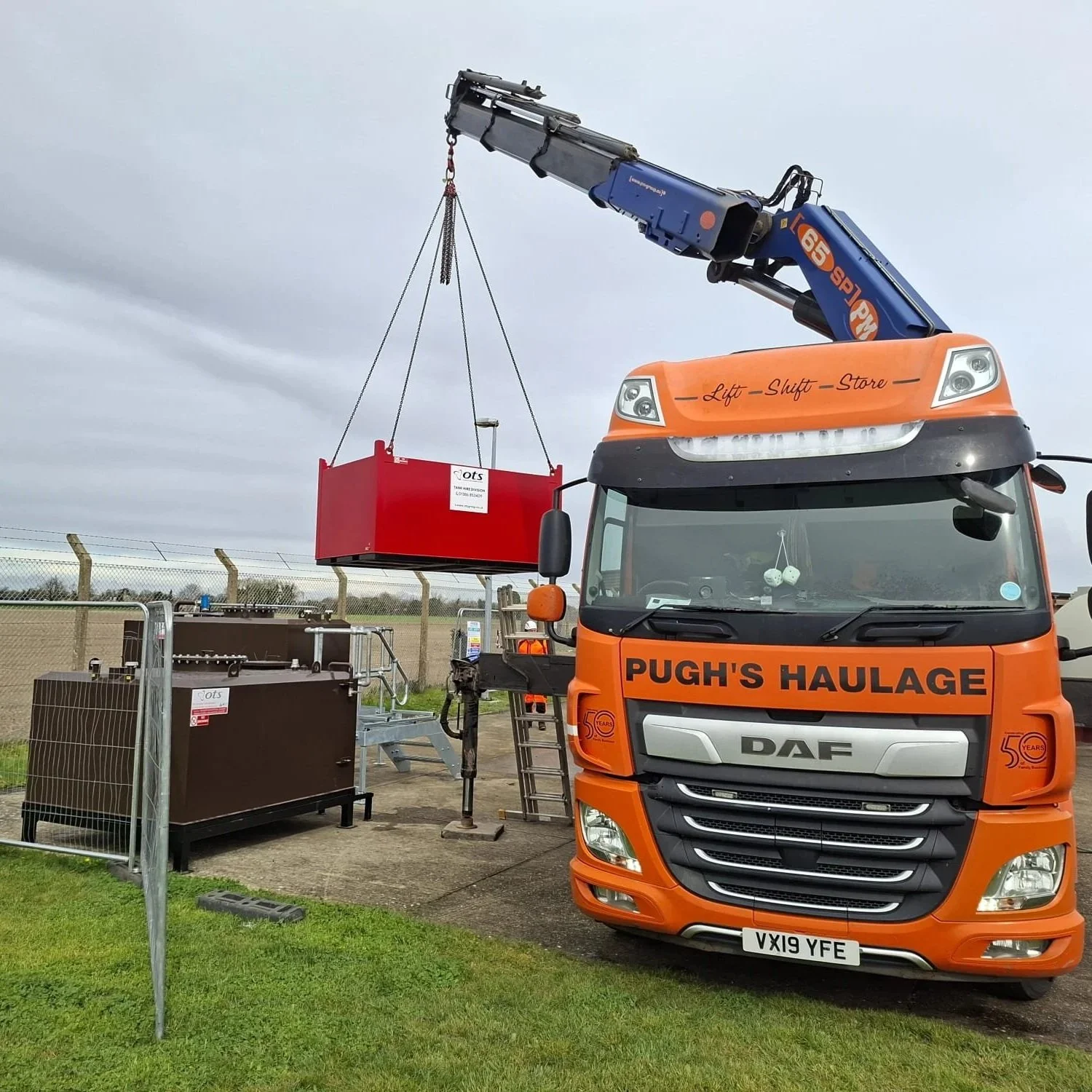
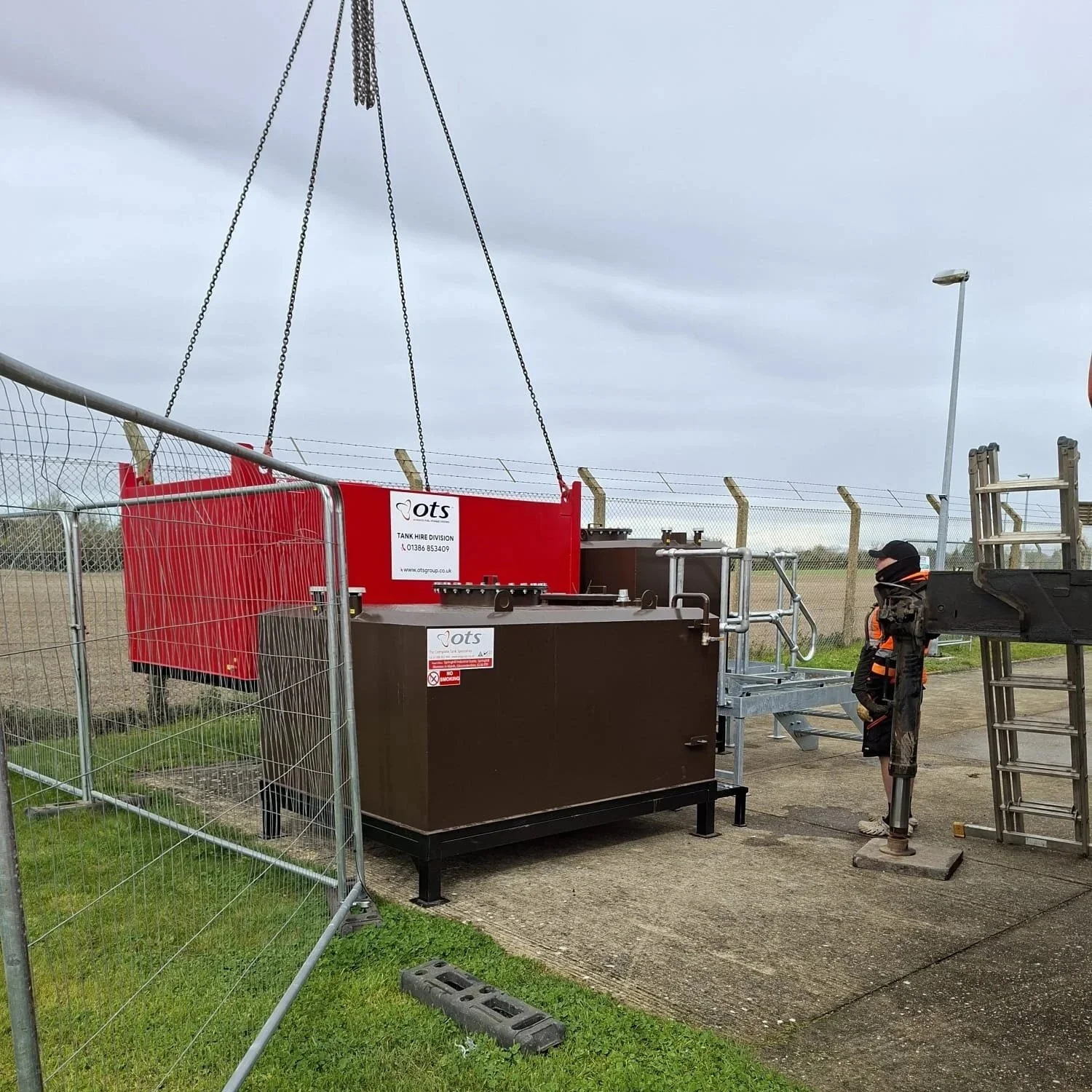
A recent OTS Group installation shows this in practice. The red OTS hire tank was installed alongside a waste oil tank as part of wider tank infrastructure works. The temporary storage was planned, delivered and positioned as part of a coordinated installation.
When fuel tank hire makes sense
Fuel tank hire can be a practical option when storage is needed quickly, temporarily, or without the capital cost of a permanent asset. It can support planned maintenance, live projects, seasonal demand, emergency replacement needs, or sites waiting for a new tank to be manufactured.
OTS Group operates a hire fleet of more than 50 tanks, with capacities ranging from 5,000 to 100,000 litres. The fleet includes fuel and leachate hire tanks, with options for different site conditions, storage requirements and operational needs.
Hire can also be used for short, medium or long-term requirements. Some clients need a tank for a defined project period. Others need interim storage while permanent infrastructure is being designed, manufactured or installed. In each case, the right solution starts with the site requirement, not only the tank size.
Planning the hire tank installation
A safe hire tank installation starts before the tank reaches site.
OTS reviews the practical details that affect how the tank will work once it’s in place. This includes access routes, lifting requirements, ground conditions, surrounding infrastructure and site activity. It also includes how the tank will be filled, monitored and accessed during use.
These details matter because hire tanks usually need to work alongside pipework, waste oil storage, dispensing equipment, drainage, vehicle routes and live operational areas. The plan has to account for the footprint of the tank as well as the full site context.
For this project for example, OTS was also installing a waste oil tank. Our plan needed to consider how both tanks would sit on site, how the working area would function around them, and how future access for inspection, servicing or removal would be managed.
That early planning helps avoid problems later. A tank that is easy to deliver but difficult to inspect, fill or maintain is not a good installation.
Safe delivery, lifting and positioning
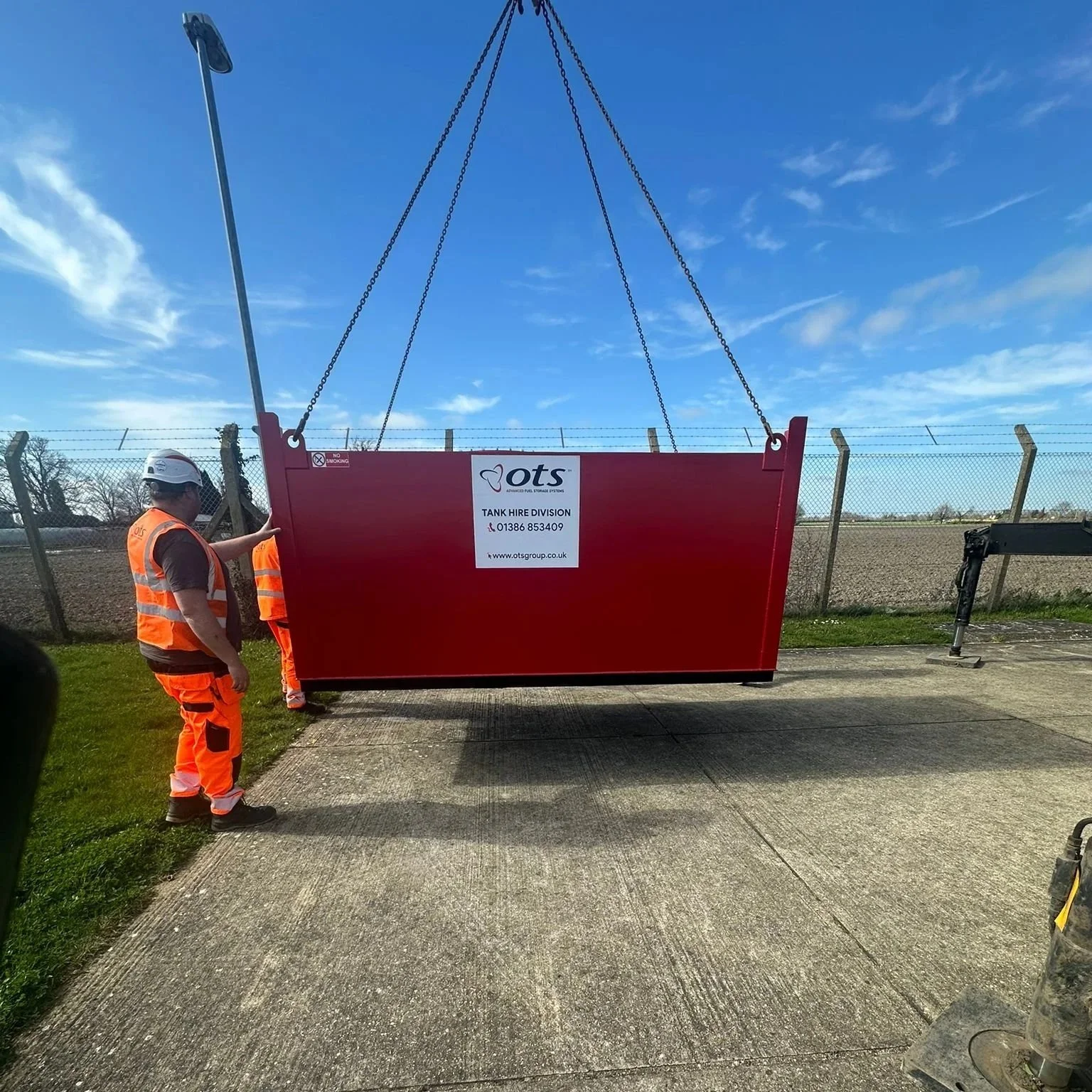
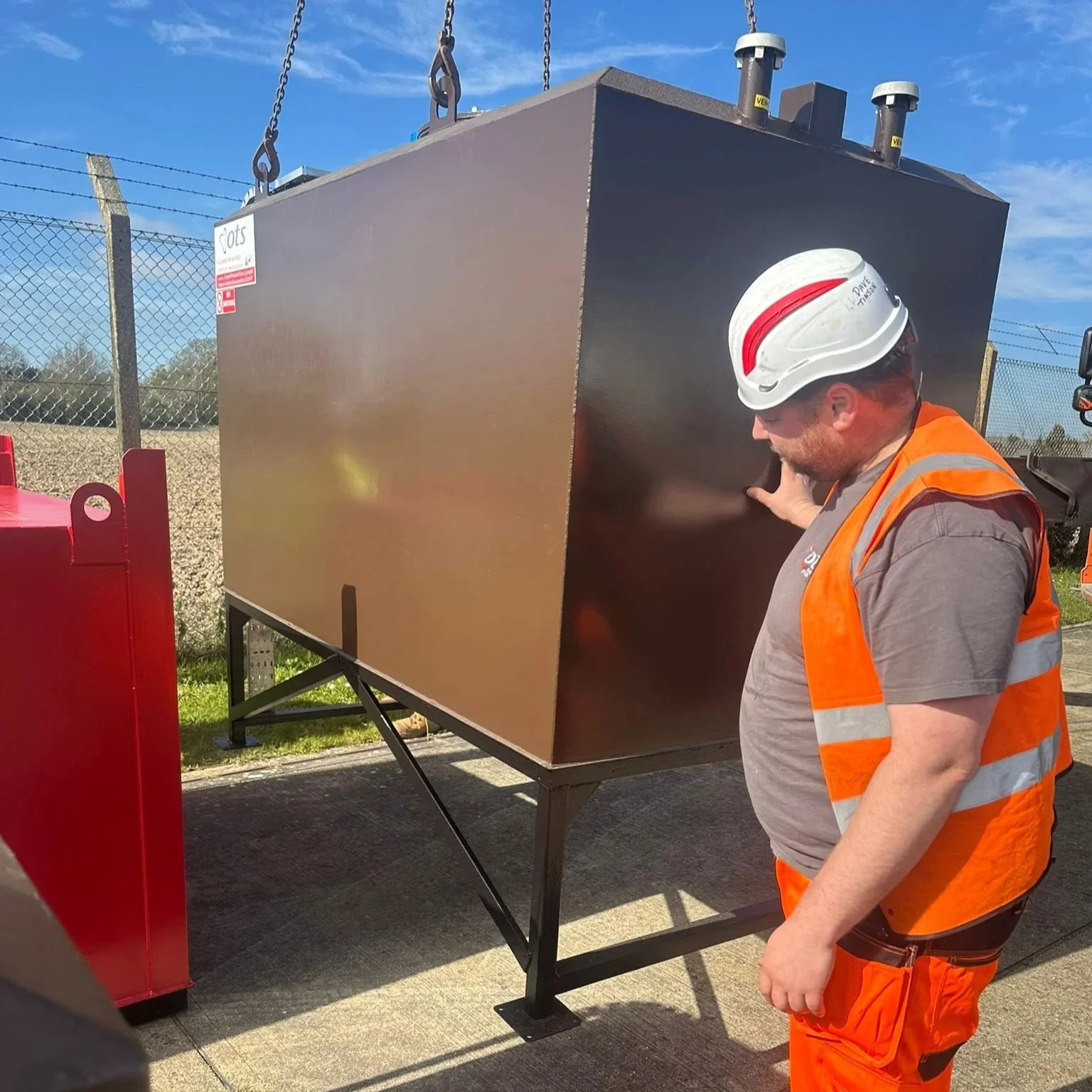
The on-site images from this installation show the practical side of fuel tank hire: transport, lifting, positioning and checks before the tank becomes part of the live site arrangement.
For larger hire tanks, safe lifting needs proper coordination. OTS can support nationwide delivery and collection, crane lift requirements, appointed person support and banksman support where needed.
The tank also has to be positioned for safe use. That means considering vehicle access, safe working zones, nearby infrastructure and future maintenance access. A well-planned lift reduces disruption and ensures the temporary installation is handled with the same discipline as a permanent tank project.
Built for compliance during the hire period
Delivery is only the start of a managed hire period.
OTS hire packages can include installation, commissioning, site checks and leak tests, along with ongoing servicing during the hire period. Scheduled inspections, tank cleaning, pump servicing and compliance documentation can all form part of the service package, depending on the hire arrangement and site requirements.
Our above ground fuel storage tanks comply with Control of Pollution Regulations, featuring a 20-year Design Life Expectancy and OFCERT OFS T200 certification. Unlike the BS799 Part 5 2010 standard, which only covers the primary tank, the OFCERT OFS T200 certification includes the bund, providing an enhanced specification.
This gives clients a clearer route to managing temporary storage responsibly. The hire tank can be treated as a controlled asset, with the right checks, records and support in place throughout its time on site.
Why experience matters in fuel tank hire
Fuel tank hire isn’t just a delivery job. Poor positioning, restricted access or unclear responsibilities can make a tank difficult to fill, inspect, maintain or remove.
OTS brings its wider fuel infrastructure experience into those decisions. The same practical understanding used to design, install, service and decommission permanent tank systems also informs how hire tanks are planned and positioned.
That is what makes the difference. The aim isn’t just to get a tank on site. It is to make temporary storage safe, usable and compliant for the site it is working in.
Fuel tank hire, delivered properly
The visible part of this installation is the lift, the positioning and the tank on site. The value is in the planning behind it.
If your site needs temporary fuel storage, interim capacity or a hire tank as part of a wider infrastructure project, speak to the OTS team about the most suitable option for your site. You’ll benefit from our manufacturing knowledge, installation experience, planned maintenance, environmental services and long-term asset support, whatever the scale or duration of the hire.