OTS Engineers Trained on New Fuel Condition Monitoring Equipment
Our environmental team recently completed specialist training on new fuel condition monitoring equipment that will be used during fuel polishing work on site.
The training focused on the MP Filtri ICM and LPA3 monitoring systems, which allow engineers to measure particulate contamination in fuel as it passes through the filtration system. Instead of relying on visual checks alone, the team can now monitor fuel cleanliness throughout the polishing process and confirm that filtration is delivering the expected improvement.
The result is a clearer understanding of fuel condition and a better way of confirming that the polishing process is delivering the expected improvement.
Investing in training and technical knowledge
Hands-on training is an important step whenever new equipment is introduced. Our environmental team recently attended a training session to learn how to use the new fuel sampling and monitoring equipment.
Investing in people and practical training is a big part of how we work at OTS. We regularly support engineers in developing new skills and, wherever possible, aim to promote from within the team as the company grows.
During the session the engineers worked through how to operate the monitoring systems correctly, how to interpret the particle readings they produce, and how those readings should influence filtration decisions during fuel polishing.
Understanding both the equipment and the data it produces allows the team to use it confidently on site and make informed decisions during fuel treatment work. It also helps ensure the service we provide continues to develop as new tools and techniques become available.
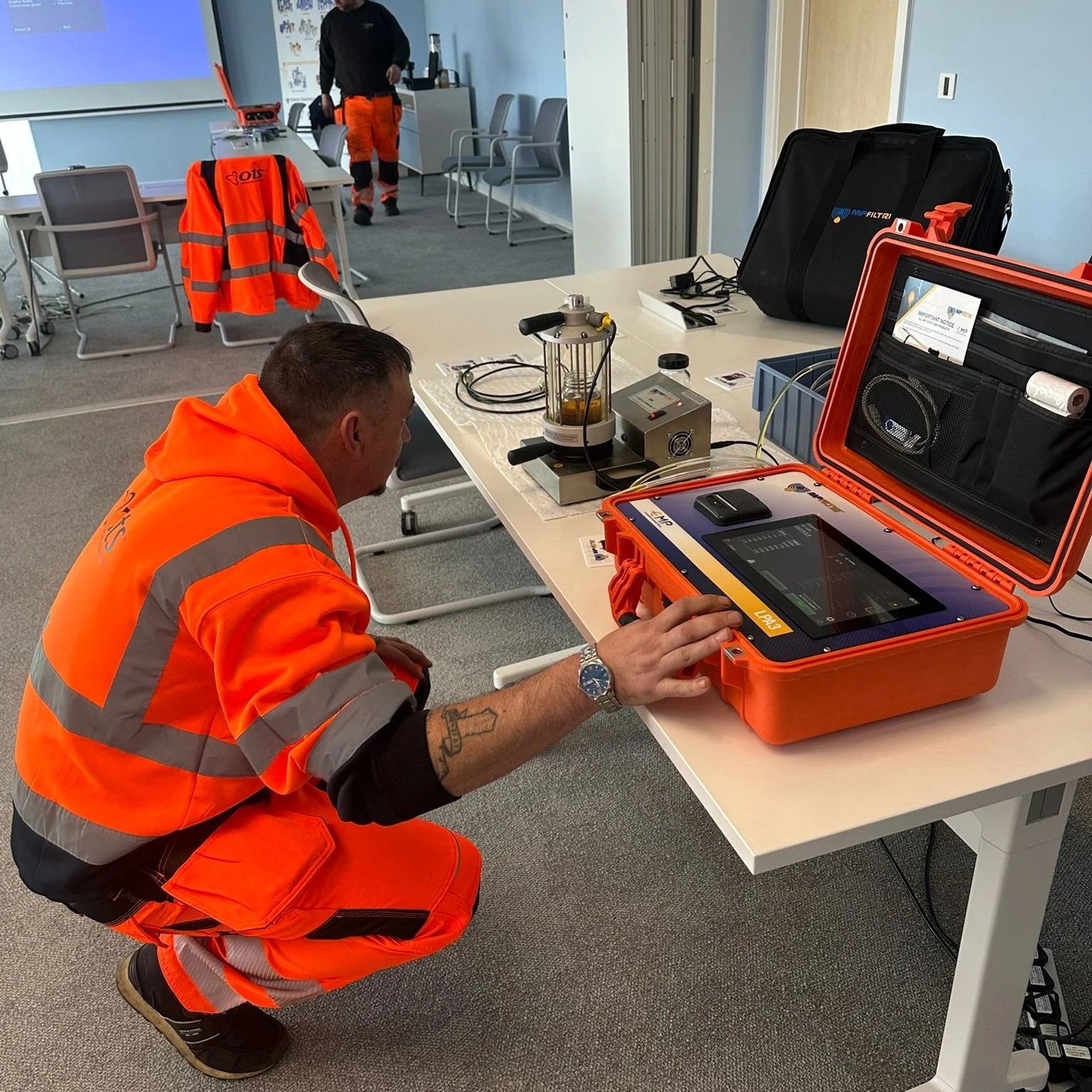
OTS engineers receiving hands-on training with the MP Filtri fuel condition monitoring equipment used to measure particulate contamination during fuel polishing.
Looking beyond what we can see
Fuel can appear clear but still contain a large number of microscopic particles. Over time these particles can cause issues such as blocked filters, and corrosion inside storage systems.
Using the new monitoring equipment, we can measure particulate levels directly in the fuel stream. This allows us to see how contamination levels change as the fuel moves through the filtration system during polishing.
Instead of assuming the fuel has improved, we can track the results as the work progresses.
Understanding fuel cleanliness readings
During the training, the team also covered how to interpret particulate readings using the ISO 4406 cleanliness code. This is the standard method used across the industry to describe the number and size of particles present in a fuel or fluid sample.
By reading these values, engineers can understand the starting condition of the fuel and see how those levels change as filtration takes place. It also provides a clear way of reporting fuel condition to clients, particularly where storage systems support critical equipment such as standby generators.
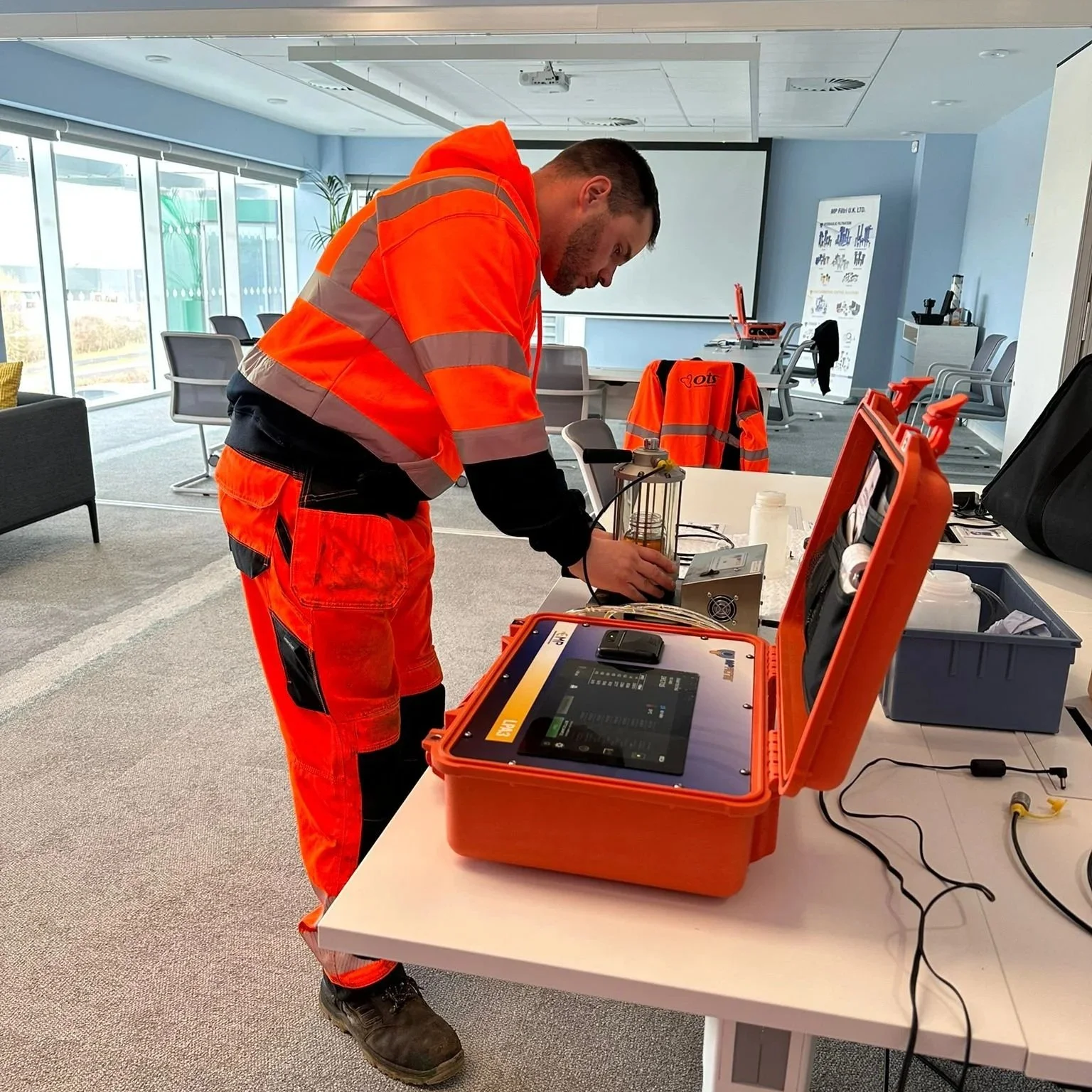
The MP Filtri monitoring system allows engineers to check fuel cleanliness in real time and interpret particulate readings using ISO 4406 contamination standards.
Choosing the right filtration approach
Another important part of the training focused on filtration media selection.
Different fuels and contamination levels require different filtration strategies. By monitoring particle levels during polishing, engineers can adjust filtration stages and media to match the condition of the fuel being treated.
This ensures filtration decisions are based on measured results rather than assumptions.
Fuel polishing carried out on site
OTS carries out fuel polishing work directly on site using dedicated mobile filtration rigs. These systems can be transported in our service vehicles and connected to storage tanks without needing to remove the fuel from site.
Where required, temporary storage tanks can also be used so that fuel systems remain operational while treatment takes place.
During polishing, engineers can now monitor fuel cleanliness using the new condition monitoring equipment. This allows us to measure the condition of the fuel before polishing begins, track improvements during filtration, and confirm the final result once the process is complete.
In most cases this on-site monitoring, combined with structured fuel sampling, provides all the data needed to assess fuel quality and confirm that polishing has been effective.
Where more detailed analysis is required, samples can still be sent to a laboratory, but for the majority of systems we are now able to carry out the necessary testing directly on site.
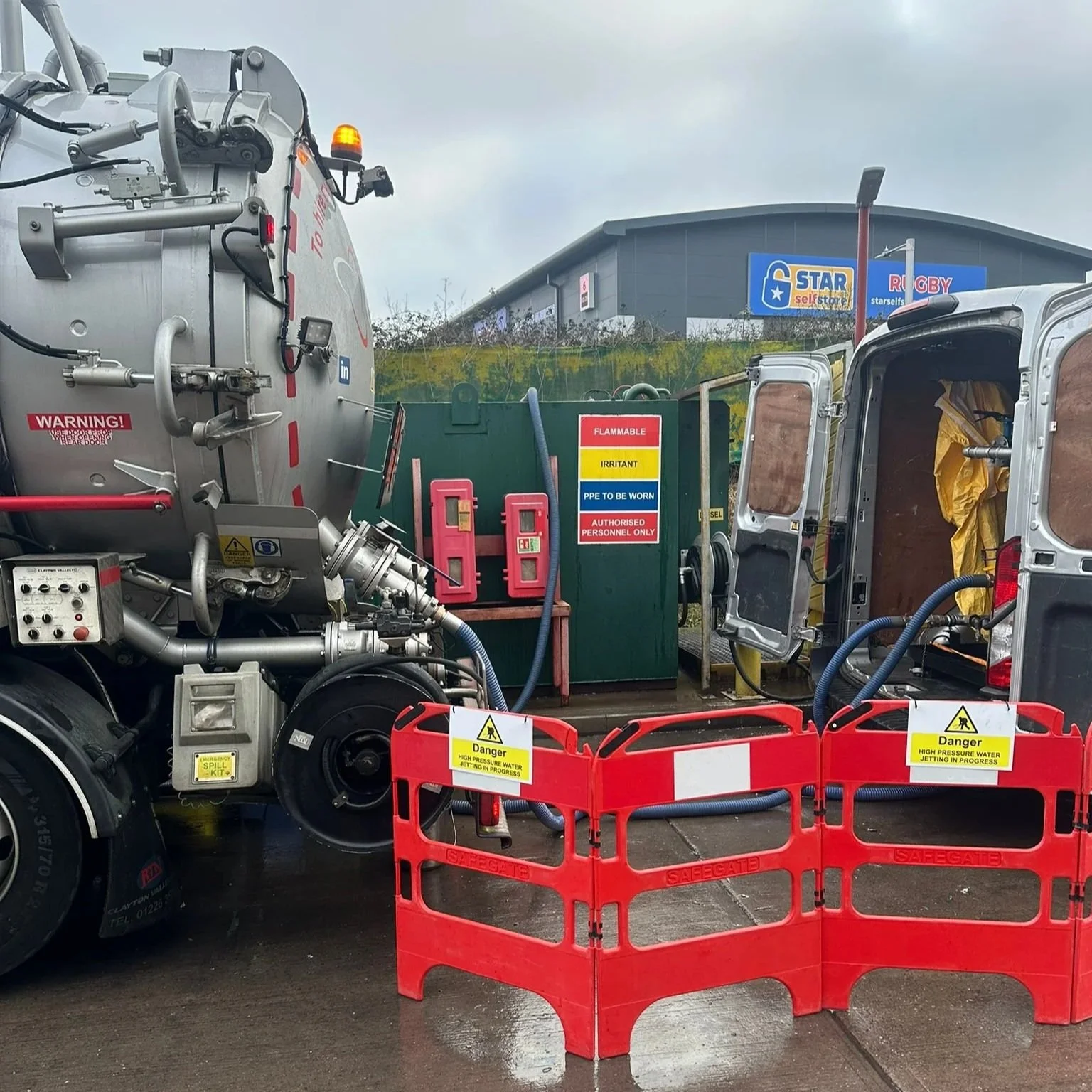
OTS carrying out fuel polishing on site using mobile filtration equipment and ADR tankers where required to support temporary fuel storage during treatment.
Backed up by measured results
Fuel polishing is often judged by how the fuel looks. With real-time monitoring, we can now go further and show how fuel cleanliness improves throughout the process.
By combining fuel sampling, laboratory testing where needed, and real-time condition monitoring, we can build a much clearer picture of fuel quality and confirm that polishing is delivering measurable results.
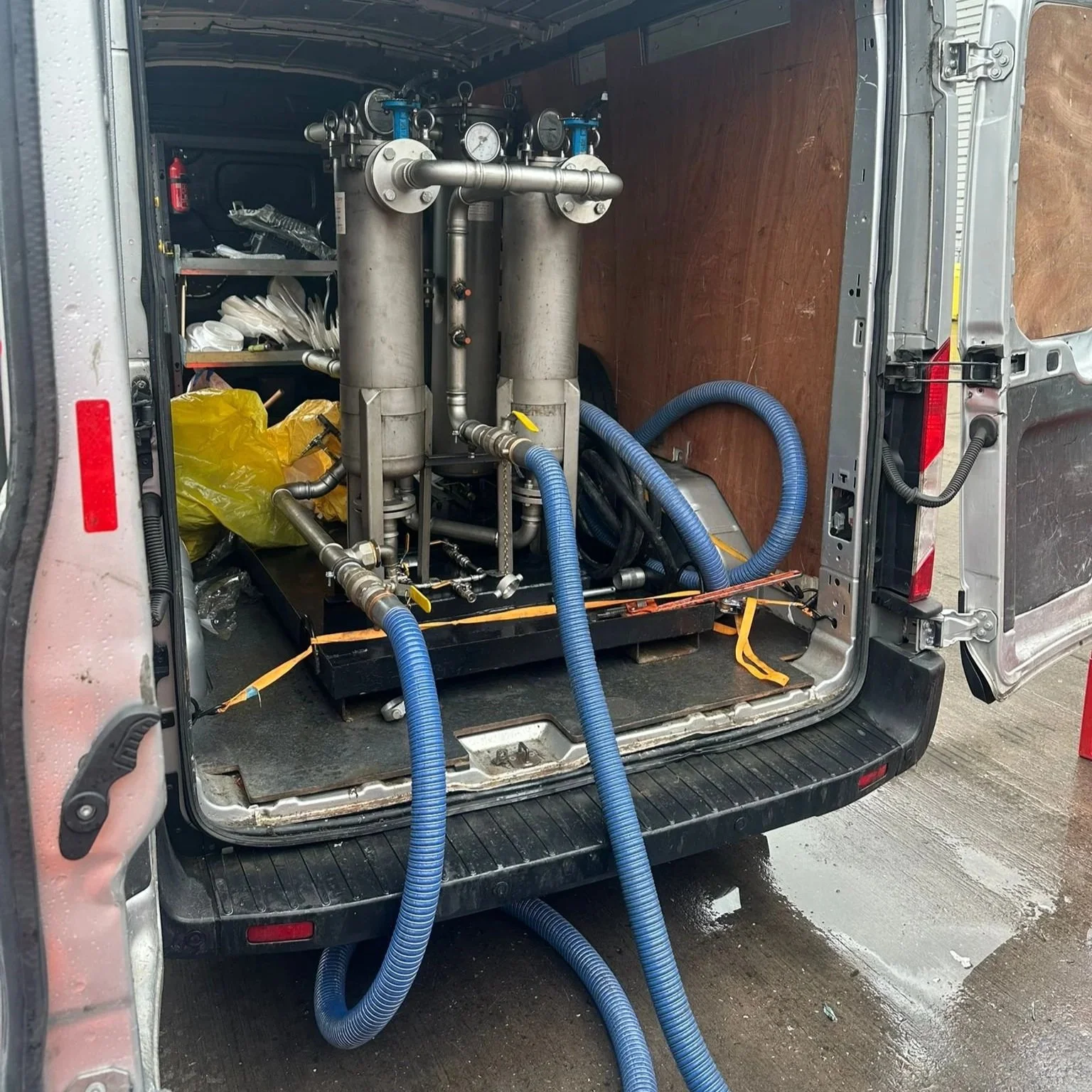
Mobile fuel polishing rig installed in an OTS service vehicle, allowing engineers to carry out filtration and fuel treatment directly on site.
Maintaining fuel quality with confidence
Fuel contamination can develop slowly and is not always obvious until it begins to affect equipment performance. Regular monitoring, structured sampling, and effective fuel polishing all play an important role in maintaining reliable fuel storage systems.
By investing in new monitoring technology and practical training for our engineers, OTS can now carry out more detailed fuel condition testing directly on site. This allows us to diagnose issues quickly, guide filtration decisions during polishing, and confirm the final fuel condition once the work is complete.
If you would like to learn more about fuel polishing, fuel sampling, or fuel condition monitoring, visit our fuel sampling and testing page.
Alternatively, if you would like to discuss a fuel quality issue or arrange a service visit, get in touch with the OTS team and we will be happy to help.